Biscutum rotatorius
Set number: 2755
-
1
-
2
-
3
-
4
-
5
-
6
10µm
Set number: 2757
-
1
-
2
-
3
10µm
Set number: 2756
-
1
-
2
10µm
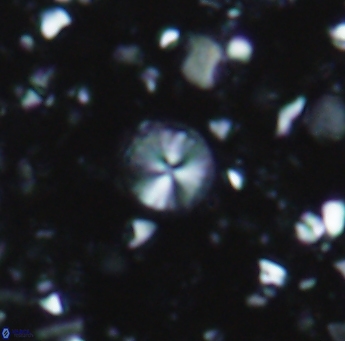
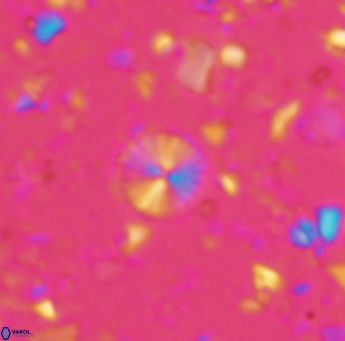
Bidiscus rotatorius Bukry, 1969
Size: 4.3 µm (coccosphere: 9.0 µm); number of segments in the distal shield: ¬20
In plan view under XPL, the distal shield is in constant extinction because the optic axis (c-axis) is perpendicular to the microscope stage, whereas the proximal shield and tube cycle display a white interference colour and exhibit length-fast (–) elongation.
The circular placolith has a distal shield larger than the proximal shield, each composed of approximately 16-30 segments, and a tube cycle.
Bukry, D. 1969. Upper Cretaceous coccoliths from Texas and Europe. University of Kansas Paleontological Contributions, Articles 51 (Protista 2): 1-79.
Holotype
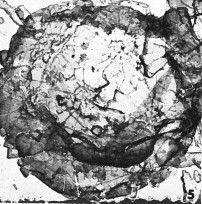
Bidiscus rotatorius
Bukry, 1969
Coniacian - Santonian
Knox County, Nebraska, USA