Calcicalathina clipeus
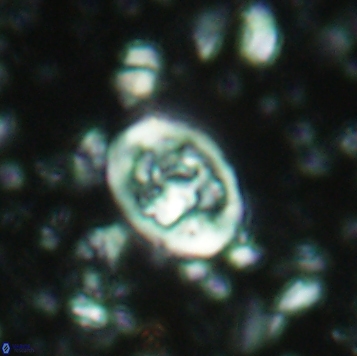
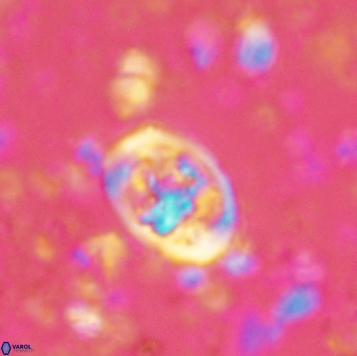
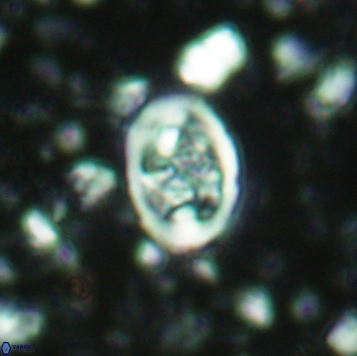
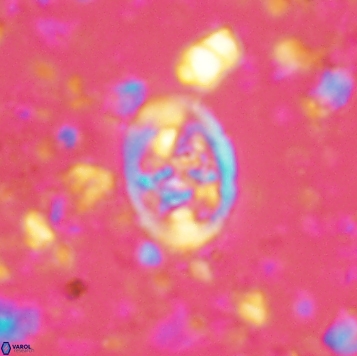
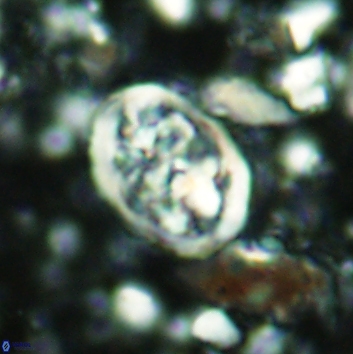
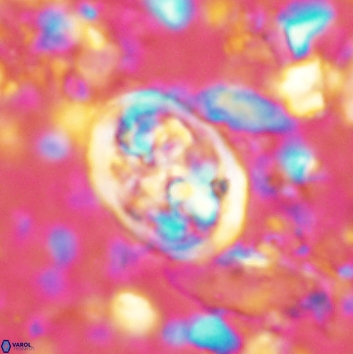
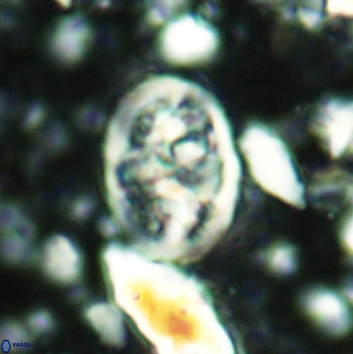
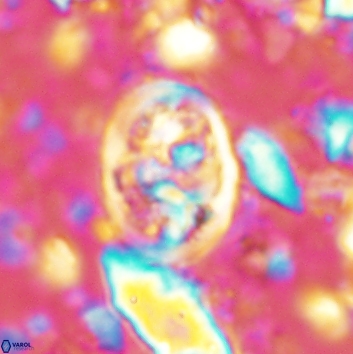
Calcicalathina clipeus Varol & Bowman, 2019
The wall remains in constant extinction because its optic axis (c‑axis) is oriented perpendicular to the microscope stage, whereas the granular central area exhibits strong birefringence.
Medium‑sized species (6.0–10.0 μm) of Calcicalathina possess a large, granular central area with four segments along the long axis at its margin. These segments are visible only at 45° and are restricted to the apex of the central area, leaving an unshielded rectangular zone along the short axis. The granular central area is clearly separated from the single‑cycle wall and lacks a distal process.
Calcicalathina clypeus differs from other low‑walled species, Calcicalathina erbae, by the presence of four segments at the apex of the central area.
Bergen, J. A. 1998. Calcareous nannofossils from the lower Aptian historical stratotype at Cassis-La Bedoule (SE France). Géologie Méditerranéene. 25(3-4): 227-255.
Varol, O. & Bowman, A.R. 2019. Taxonomic revision of selected Late Jurassic (Tithonian) calcareous nannofossils and the application of mobile mounting. Neues Jahrbuch für Geologie und Paläontologie, Abhandlungen. 291/1 (2019): 1–23
Holotype
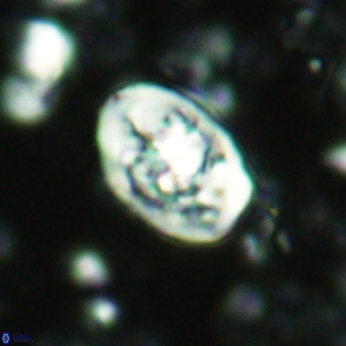
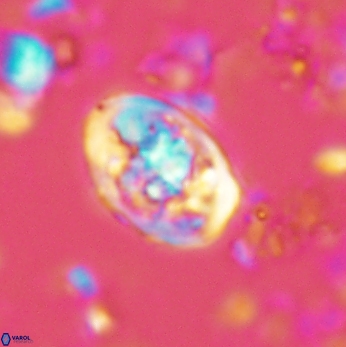
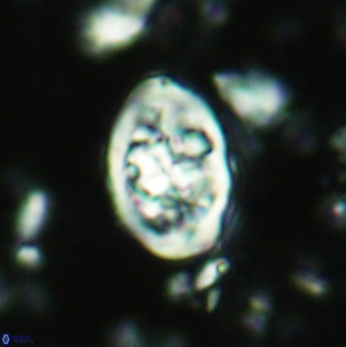
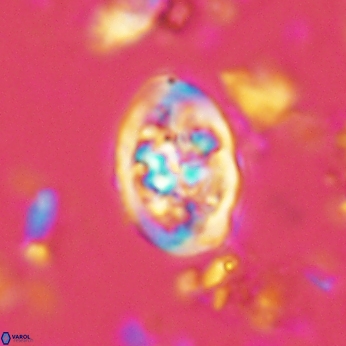
Calcicalathina clipeus
Varol & Bowman, 2019
Early Valanginian
Angles, SE France