Lapideacassaceae
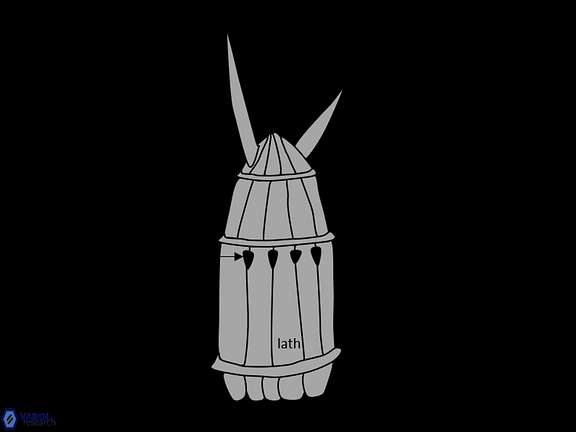
Text Fig. 1 Terminology of Lapideacassaceae
Lapideacassis Black, 1971b
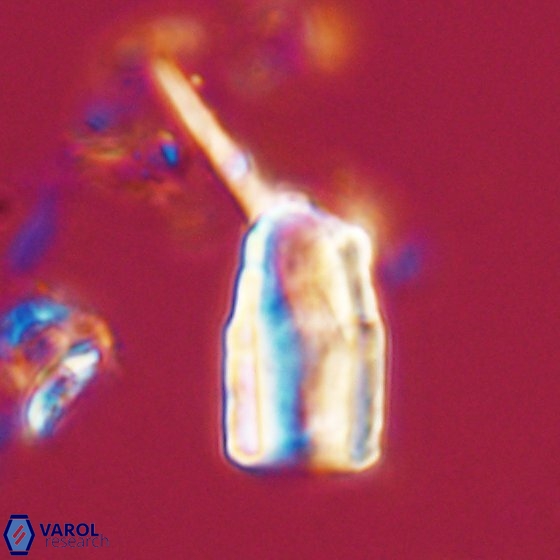
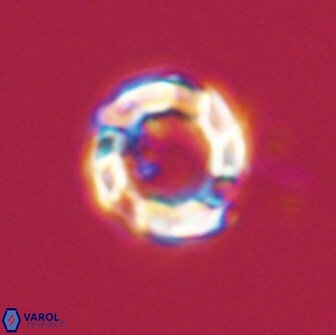
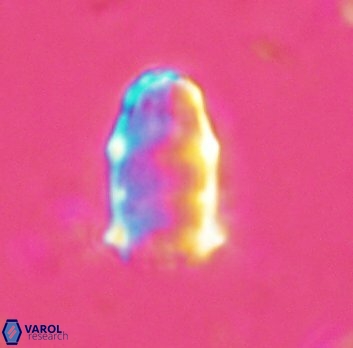
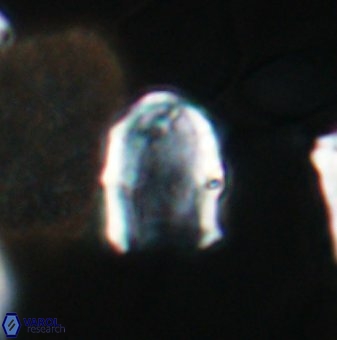
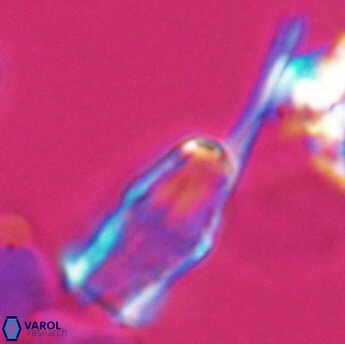
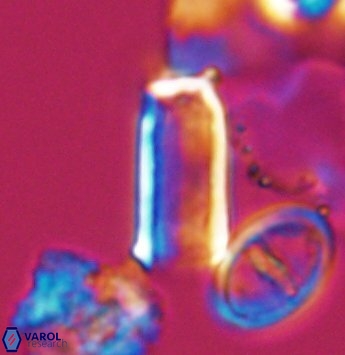
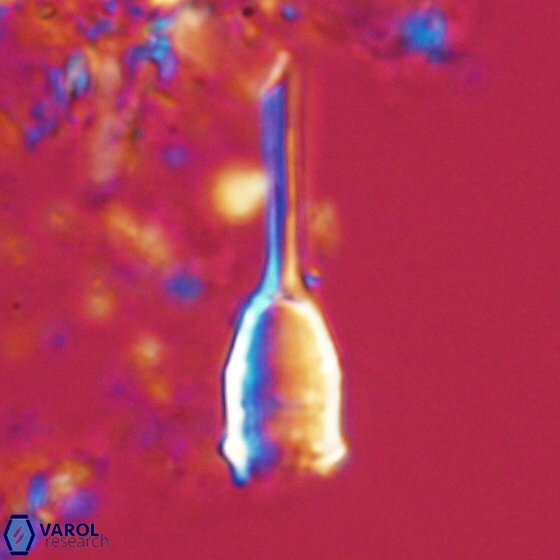
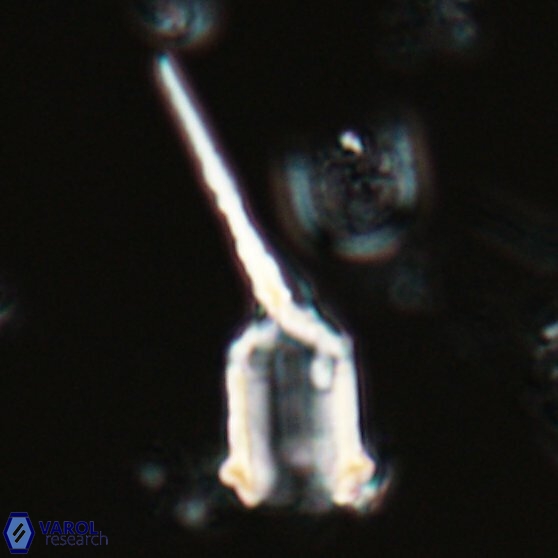
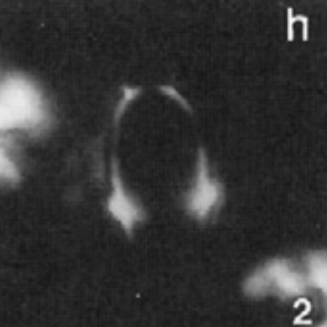
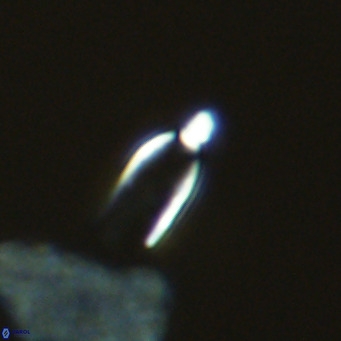
Large cone-shaped nannoliths characterised by a narrow wall composed of a proximal tier, collar, one or more distal tiers, and a cone are assigned to the Lapideacassaceae. The wall is constructed of elongated longitudinal laths, and distinct ledges mark the junctions between successive tiers. Spines may be present or absent. The entire nannolith is birefringent in both plan and side view.
Within the family, genera are distinguished primarily on the basis of the number of distal tiers. Species possessing two distal tiers are assigned to Lapideacassis, whereas those with a single distal tier are placed in Scampanella. Cenozoic species lacking distal tiers are assigned to Tintinnabuliformis.
Burnett (1997c) regarded Lapideacassis and Scampanella as synonymous; however, this interpretation is not followed here, as maintaining both genera provides clearer taxonomic organisation.
Black, M. 1971b. Problematical Microfossils from the Gault Clay. Geological Magazine 108(4): 325-327.
Burnett, J. A., 1997c. New species and new combinations of Cretaceous nannofossils and a note on the origin of Petrarhabdus (Deflandre) Wise & Wind. Journal of Nannoplankton Research 19(2), 133-146.
Forchheimer, S., Stradner, H., 1973. Scampanella, a new genus of Cretaceous nannofossils. Verhandlungen der Geologischen Bundesanstalt (Wien) 2, 286-289.
Varol, O. 1991. New Cretaceous and Tertiary Calcareous Nannofossils. Neues Jahrbuch für Geologie und Paläontologie Abhandlungen 182: 211-237.
Young, J. R. & Bown, P. R.1997. Cenozoic calcareous nannoplankton classification. Journal of Nannoplankton Research. 19(1): 36-47.