Asapholithos neoanfractus
Set number: 2701
-
1
-
2
-
3
-
4
-
5
-
6
-
7
-
8
-
9
-
10
-
11
10µm
Set number: 2700
-
1
-
2
-
3
-
4
-
5
-
6
-
7
-
8
-
9
-
10
-
11
-
12
-
13
-
14
-
15
-
16
-
17
10µm
Holotype
Set number: 2699
-
1
-
2
-
3
-
4
-
5
-
6
-
7
-
8
-
9
-
10
10µm
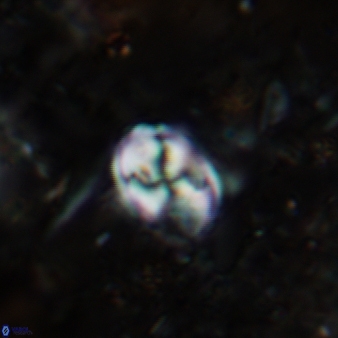
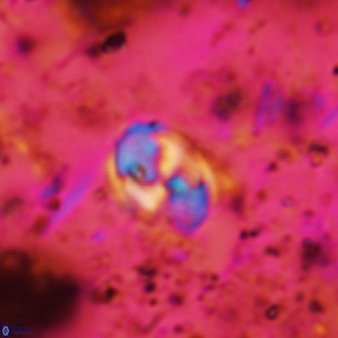
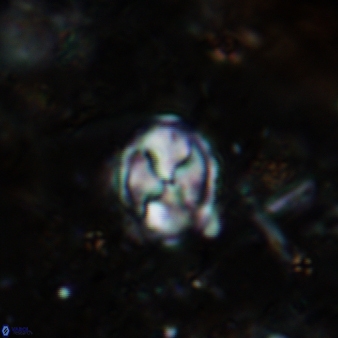
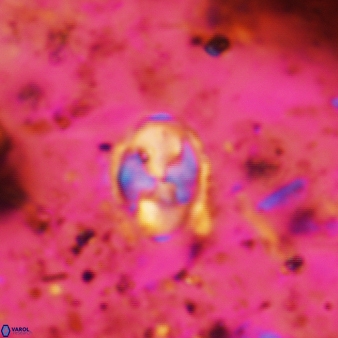
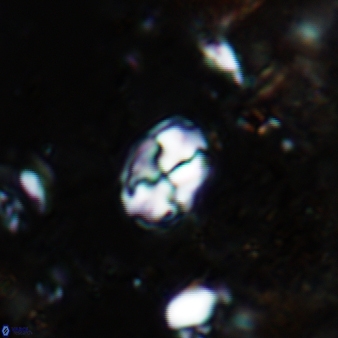
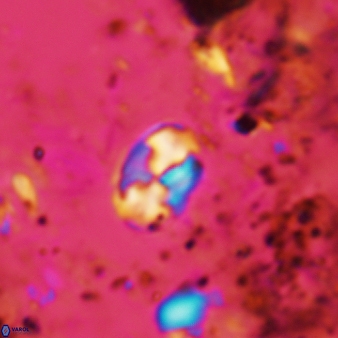
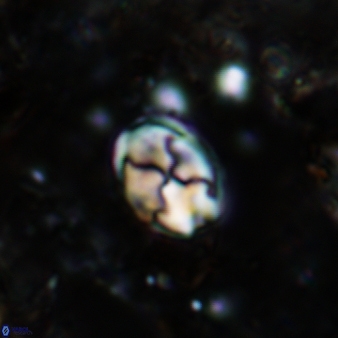
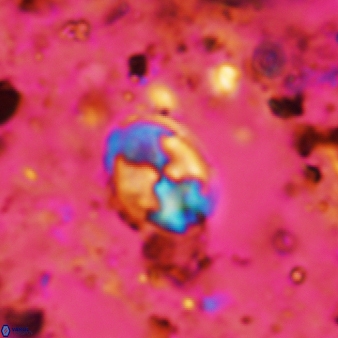
Asapholithos neoanfractus Varol, in prep.
Calculites anfractus Jakubowski (1986) - sensu Schueth & Lees, 2019
The four crystalline blocks in the central area are separated by zigzag-shaped diagonal sutures and surrounded by a narrow wall. A distal process is absent.
From Greek neo, meaning new and anfractus
The crystalline blocks display a greyish-white interference colour - raising doubts about its assignment to Asapholithus - while the wall exhibits a white interference colour.
Asapholithos neoanfractus superficially resembles Asapholithos anfractus, but it is distinguished by its white interference colour, whereas Asapholithos anfractus exhibits a grey interference colour (in constant extinction, due to the optic axis/c-axis being vertical to the microscope stage). Additionally, A. neoanfractus occurs in Early Turonian to Early Coniacian sediments, while Asapholithos anfractus is restricted to the Early Cenomanian.
Asapholithos neoanfractus has an overlapping stratigraphic range with Calculites axosuturalis, but it differs in having diagonal sutures without a distal process, whereas Calculites axosuturalis shows nearly axial sutures with a distal process.
Bralower, T. J. & Bergen, J. A. 1998. Cenomanian–Santonian calcareous nannofossil biostratigraphy of a transect of cores drilled across the Western Interior Seaway. In: Dean, W. E. & Arthur, M. A. (Eds.) Stratigraphy and paleoenvironments of the Cretaceous Western Interior Seaway. SEPM Concepts in Sedimentology and Paleontology. 59–77.
Jakubowski, M., 1986. New calcareous nannofossil taxa from the Lower Cretaceous of the North Sea. INA Newsletter. 8, 38-42.
Schueth, J. D., Lees, J. A., 2019. Pioneer nannofossil assemblages from the initial transgression of the Niobrara seaway in the Turonian, San Juan Basin, New Mexico, USA. Marine Micropaleontology 151, 1-12.
Holotype
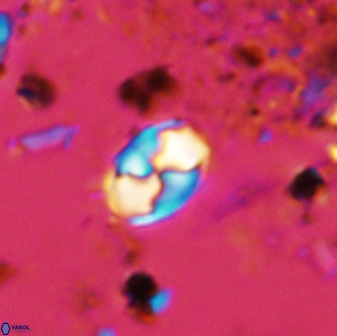
Asapholithos neoanfractus
Varol, in prep.
Early Turonian
Onshore Texas, USA