Cleistorhabdus williamsii
Set number: 2937
-
1
-
2
-
3
-
4
-
5
-
6
-
7
-
8
-
9
-
10
10µm
Set number: 2936
-
1
-
2
-
3
-
4
-
5
-
6
-
7
10µm
Set number: 2935
-
1
-
2
-
3
-
4
-
5
-
6
-
7
10µm
Set number: 2934
-
1
-
2
-
3
-
4
-
5
-
6
-
7
-
8
-
9
10µm
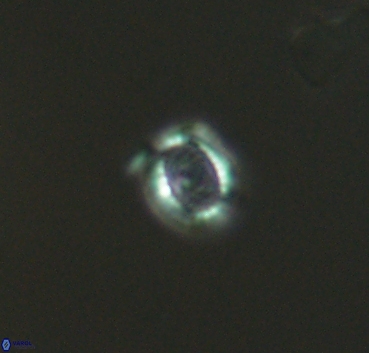
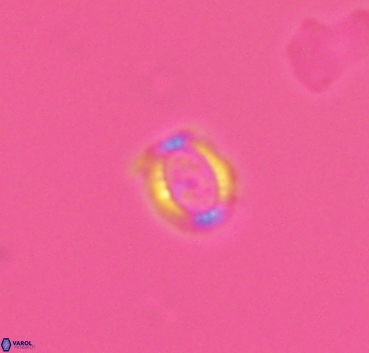
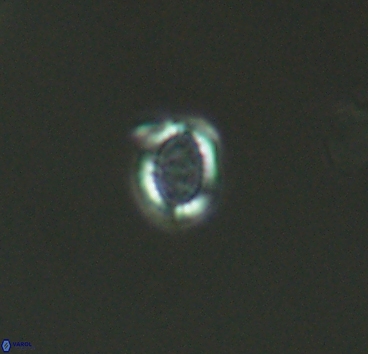
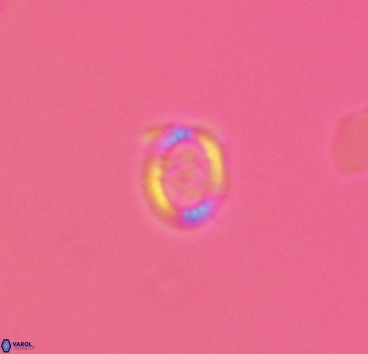
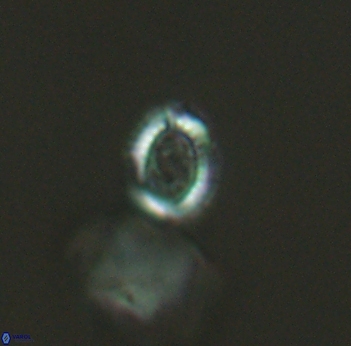
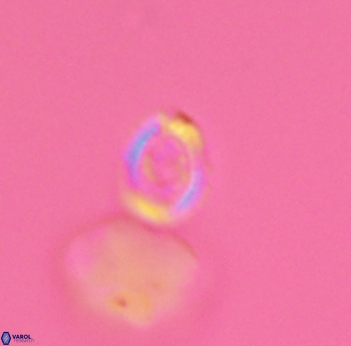
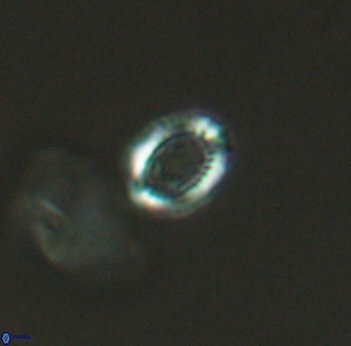
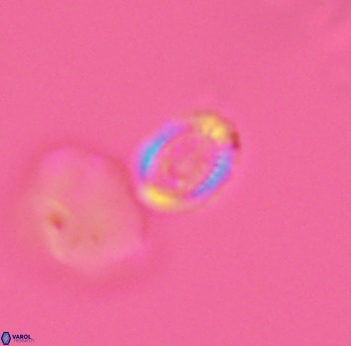
Cleistorhabdus williamsii Black, 1972a
The distal shield and the ring of segments in the central area remain in constant extinction under crossed polars because the optic axis (c‑axis) is perpendicular to the microscope stage, whereas the proximal shield, the narrow tube cycle, and the central process exhibit first‑order greyish‑white interference colours.
Podorhabdid is constructed of a distal shield composed of non‑imbricated segments, a proximal shield, a narrow tube cycle, and a central area completely filled by a ring of segments—leaving no pores—that supports a hollow distal process, which often occupies the entire central area.
Black, M. 1972a. British Lower Cretaceous Coccoliths. I-Gault Clay (Part 1). Palaeontographical Society Monograph. 126: 1-48.
Holotype
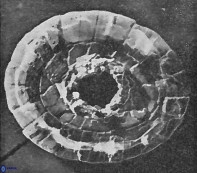
Cleistorhabdus williamsii
Black, 1972
Late Albian
Folkestone, England