Helenea acuminata
Set number: 3097
-
1
-
2
-
3
-
4
10µm
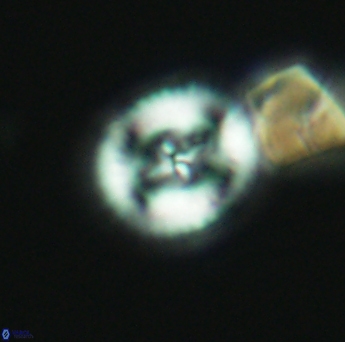
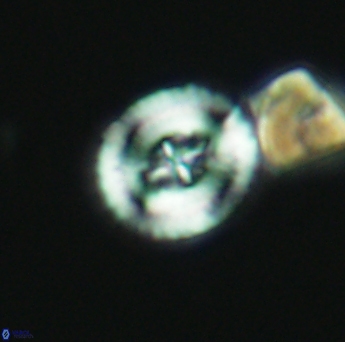
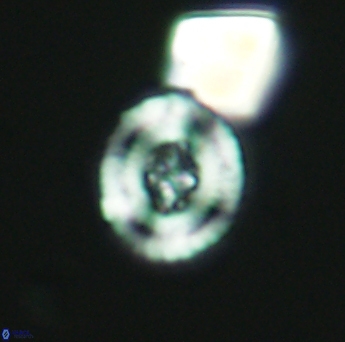
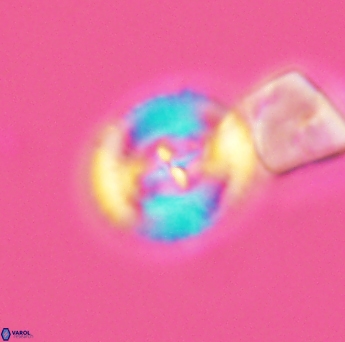
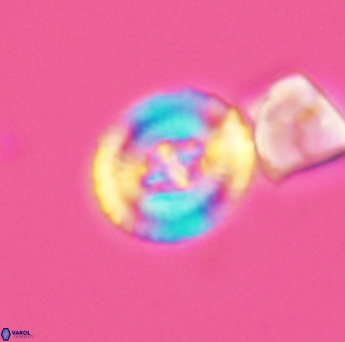
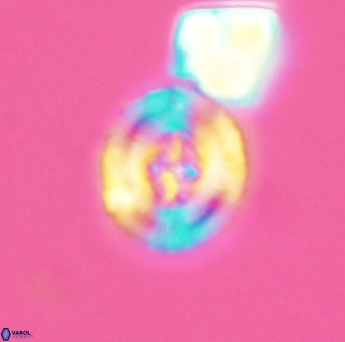
Helenea acuminata Varol, in prep.
From the Latin acuminata, meaning “pointed”, referring to the pointed ends of the arms of the central cross.
Length: 7.35 µm; width: 6.43 µm; width of the pelaga: 1.94 µm; width of the central area: 2.55 µm; ellipticity: 1.14.
Subcircular species (ellipticity: 1.4) of Helenea are characterised by an axial cross that may be slightly rotated relative to the axis of the placolith. The arms of the cross have pointed terminations and support a short distal process with a distinct square-shaped termination.
The entire species exhibits first-order, slightly greyish-white interference colours. The pelaga of Helenea acuminata exhibits inclined extinction and length-fast (-) elongation in its natural settling position, as seen in plan view under crossed polars.
Helenea acuminata is distinguished from Helenea chiasta and Helenea staurolithina by its subcircular outline and by having a central cross with arms terminating in blunt points. The latter species has an elliptical outline (ellipticity approximately 2.5) and a central cross with arms that terminate in bifurcations, without forming additional pores.
Worsley, T. R., 1971. Calcareous nannofossil zonation of Upper Jurassic and Lower Cretaceous sediments from the Western Atlantic. In: Farinacci, A. (ed.), Proceedings of the Second Planktonic Conference Roma 1970. Edizioni Tecnoscienza, Rome vol. 2, pp. 1301-1321.