Cretarhabdus conicus
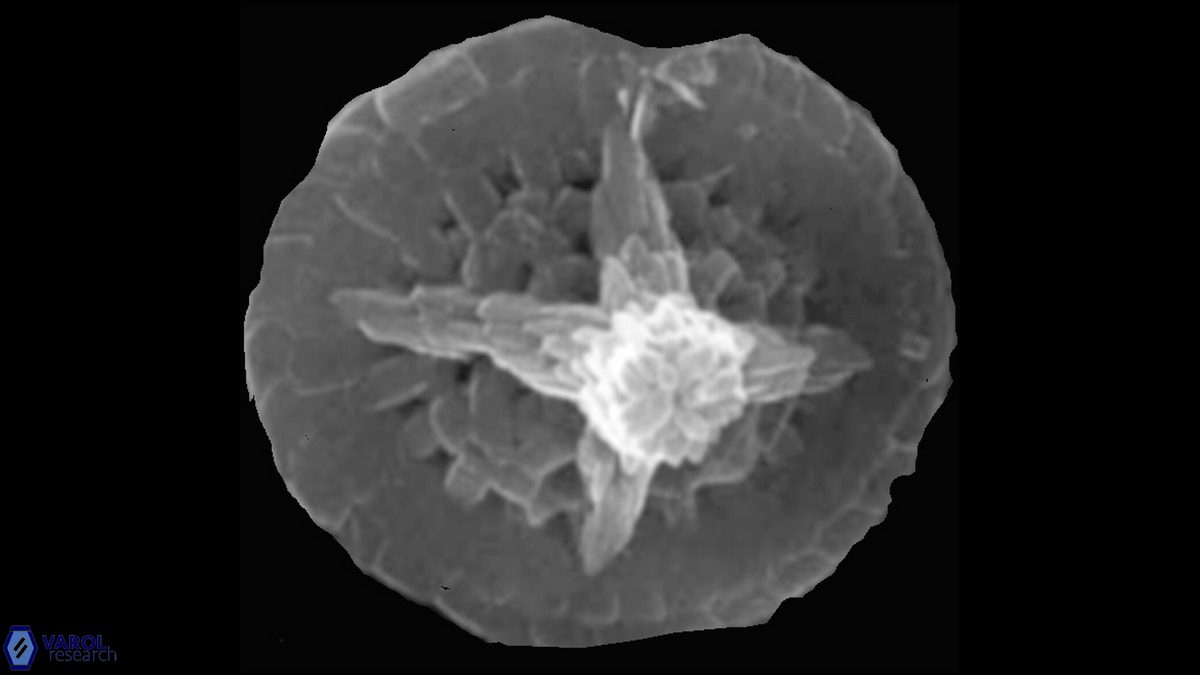
SEM photo of Cretarhabdus conicus from Mutterlosa, 1992b (Pl. 3, Fig. 2)
Set number: 3023
-
1
-
2
-
3
10µm
Set number: 3022
-
1
-
2
-
3
-
4
-
5
-
6
-
7
-
8
-
9
-
10
10µm
Set number: 3021
-
1
-
2
-
3
-
4
-
5
-
6
-
7
-
8
-
9
-
10
-
11
-
12
10µm
Set number: 3019
-
1
-
2
-
3
-
4
10µm
Set number: 3020
-
1
-
2
-
3
-
4
-
5
-
6
10µm
Cretarhabdus conicus Bramlette & Martini, 1964
The holotype is preserved in side view, whereas the isotype is in plan view and clearly shows the arm tip of the axial cross overlapping the pelaga.
The entire species exhibits first-order, slightly greyish-white interference colours. The pelaga of Cretarhabdus conicus exhibits weak inclined extinction and length-slow (+) elongation in its natural settling position, in plan view under crossed polars.
Large species of Cretarhabdus are constructed of cretarhabdid shields and a tube cycle surrounding a large central area, with lateral bars delimiting approximately 16–24 pores in the outer cycle, and a distinct axial cross whose arm tips overlap the pelaga, supporting a distal process.
Bramlette, M. N. & Martini, E. 1964. The great change in calcareous nannoplankton fossils between the Maastrichtian and Danian. Micropaleontology. 10(2): 291-322.
Mutterlose, J., 1992b. Lower Cretaceous nannofossil biostratigraphy off northwestern Australia (Leg 123). Proceedings of the Ocean Drilling Program, Scientific Results 123, 343-368.
Holotype
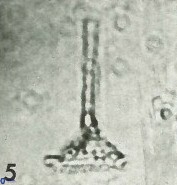
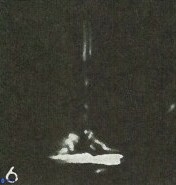
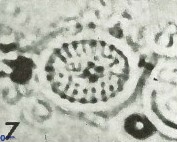
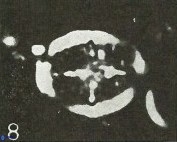
Cretarhabdus conicus
Bramlette & Martini, 1964
Late Maastrichtian
Arkadelphia Clay, USGS locality 16991, Alabama, USA