Cretarhabdus limbicrassus
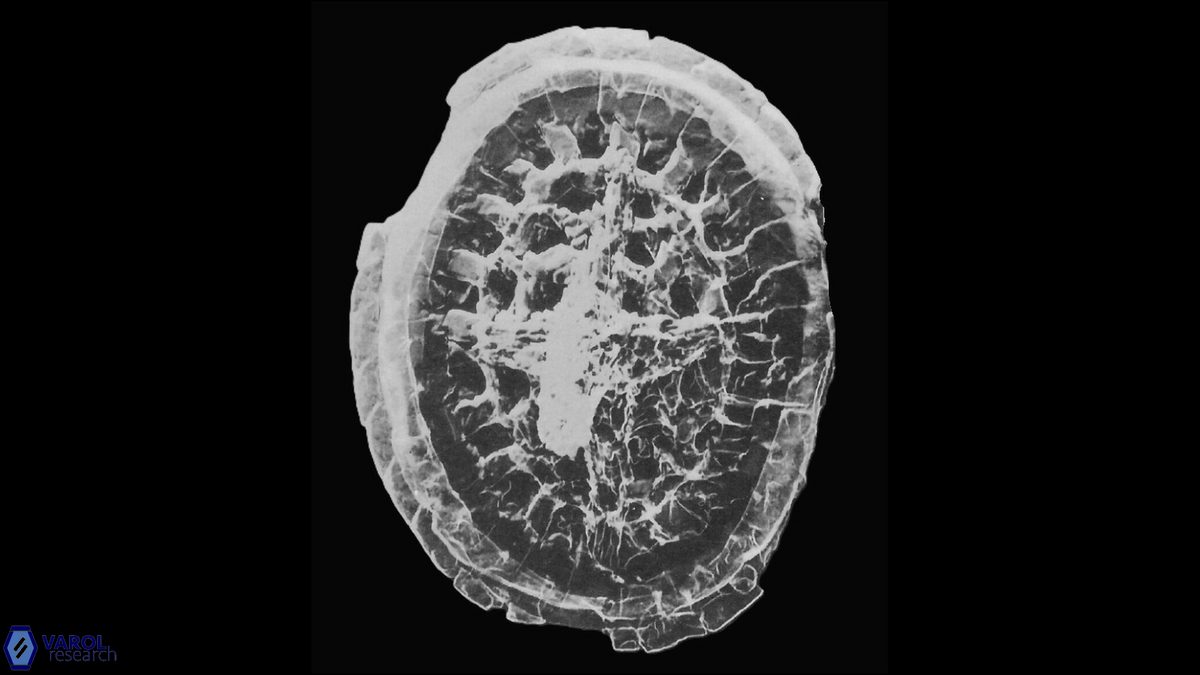
SEM photo of Cretarhabdus limbicrassus from Black, 1972a (Pl. 16, Fig. 5)
Set number: 3024
-
1
-
2
-
3
-
4
-
5
-
6
-
7
-
8
-
9
-
10
-
11
-
12
-
13
-
14
-
15
10µm
Stradneria limbicrassa Reinhardt, 1964
Cretarhabdella spectabilis Black, 1971a
Cretarhabdella lateralis Black, 1972a
Cretarhabdus biseriatus Forchheimer, 1972
The entire species exhibits first-order, slightly greyish-white interference colours. The pelaga of Cretarhabdus limbicrassus exhibits a weak inclined extinction and length-slow (+) elongation in their natural settling position, in plan view under crossed polars.
Species of Cretarhabdus are constructed of cretarhabdid shields and a tube cycle surrounding a large central area, with lateral bars delimiting approximately 20 or more pores in the outer cycle and an axial cross supporting a distal process.
Black, M. 1971a. Coccoliths of the Speeton Clay and Sutterby Marl. Proceedings of the Yorkshire Geological Society 38: 381-424.
Black, M. 1972a. British Lower Cretaceous Coccoliths. I-Gault Clay (Part 1). Palaeontographical Society Monograph. 126: 1-48.
Forchheimer, S. 1972. Scanning electron microscope studies of Cretaceous coccoliths from the Köpingsberg Borehole No. 1, SE Sweden. Sveriges Geologiska Undersökning, Series C. #668, 65: 1-141.
Reinhardt, P. 1964. Einige Kalkflagellaten-Gattungen (Coccolithophoriden, Coccolithineen) aus dem Mesozoikum Deutschlands. - Monatsberichteder Deutschen Akademieder Wissenschaftenzu Berlin. 6: 749-759.
Holotype
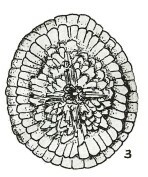
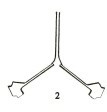
Stradneria limbicrassa
Reinhardt, 1964
Maastrichtian
Rugen, Germany