Heterorhabdus ficula
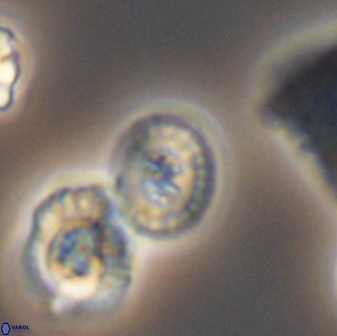
Coccolithites ficula Stover, 1966
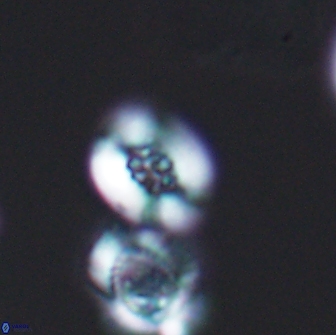
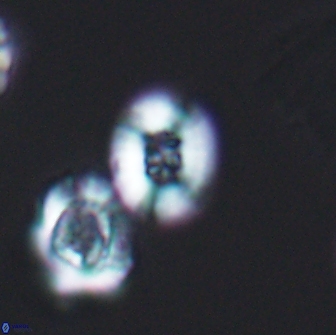
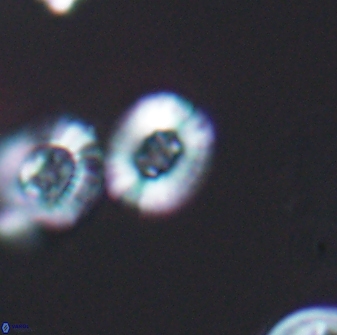
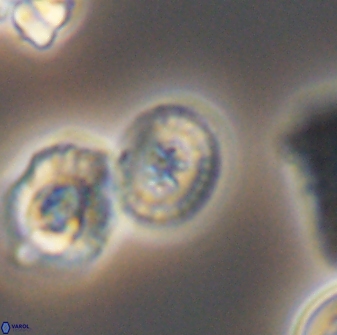
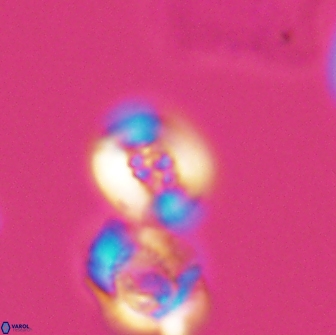
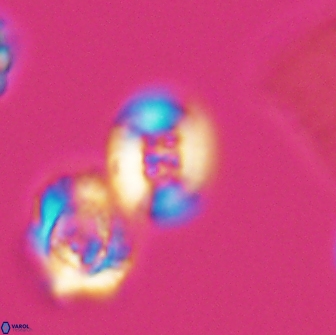
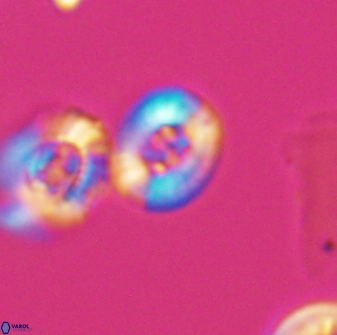
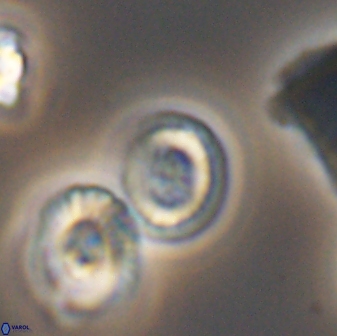
The subcircular placolith has a cretarhabdid pelaga composed of radial, non-imbricate segments and a narrow central area spanned by an indistinct axial cross lacking a distal process. Approximately eight to twelve closely spaced lateral bars are present; these do not follow a regular pattern and may delimit very narrow pores that are not resolvable under the light microscope.
The entire placolith exhibits first-order, greyish-white interference colours. The pelaga of Heterorhabdus ficula shows inclined extinction and length-fast (-) elongation in plan view under crossed polars.
Heterorhabdus ficula differs from Heterorhabdus primitivus in having a subcircular outline and approximately eight lateral bars in the central area, whereas the latter has an elongated outline and approximately twelve lateral bars.
Stover, L. E. 1966. Cretaceous coccoliths and associated nannofossils from France and the Netherlands. Micropaleontology 12(2): 133-167.
Perch-Nielsen, K. 1973c. Neue Coccolithen aus dem Maastrichtien von Danemark, Madagaskar und Agypten. Bulletin of the Geological Society of Denmark. 22: 306-333.
Holotype
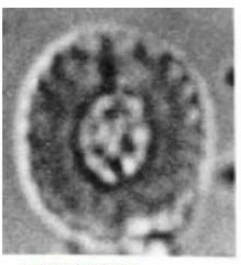
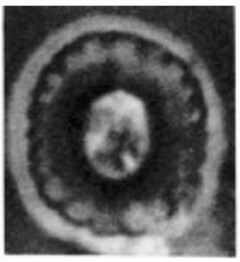
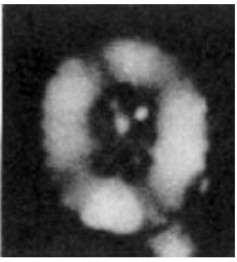

Heterorhabdus ficula
Stover, 1966
Turonian
Faubourg St. Jacques, just west of Joigny, France.